Background
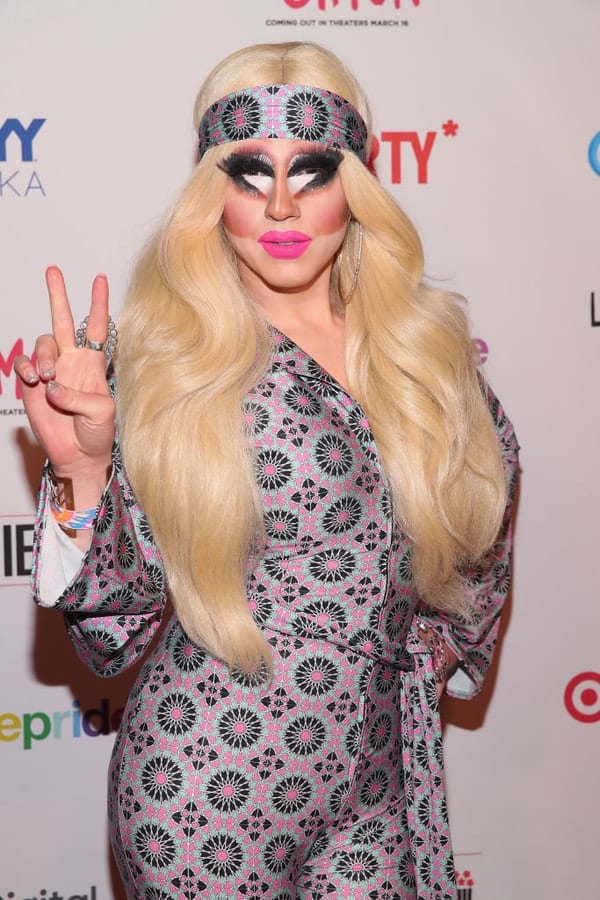
Although spiking in popularity in the past two decades, drag queening has been around for a long time and often gets mixed up in its definition. Johnathan David, author of Drag Diaries, focuses on two origin points. One in the ancient ceremonies of Native Americans, Indigenous Southern Americans, and Ancient Egyptians, and the other Japanese theater. Cross dressing was heavily documented in the mentioned ancient ceremonies, as well as a few others and continues to exist today in tribal ceremonies. In Japanese theater, drag divides the Kabuki and Noh dramas. Noh derives from Dengaku, which is a folk dance associated with rice planting and fertility. Kabuki, is a form of Japanese theater that it rose to popularity in the 17th century. In Kabuki theater, the female impersonators are carefully made-up, speak in falsetto voices, and move to suggest the essence of femininity.
In Roger Baker’s book Drag: A History of Female Impersonation in the Performing Arts, attributes the English Church to help with “formal drama [coming], literally, from the church. In an effort to help the illiterate and, well, less intelligent members of the congregation better understand church worship, parts of the mass were dramatized in very simple ways.” Baker notes that for the cross-dressing component of the sacred performances omitted women entirely. Stating that “Women played no active part in the services and the offices of the church, so the original acting was done exclusively by men, choirboys assisting the clerks and playing women’s roles when required” Once Western theater transitioned from its religious roots to something less sacred, the rules excluding women were kept intact.
A common stigma around this deviant behavior is the act of homosexuality. It is not till much after this that Baker notes that cross-dressing and homosexuality gets tided together.
RuPaul’s Drag Race
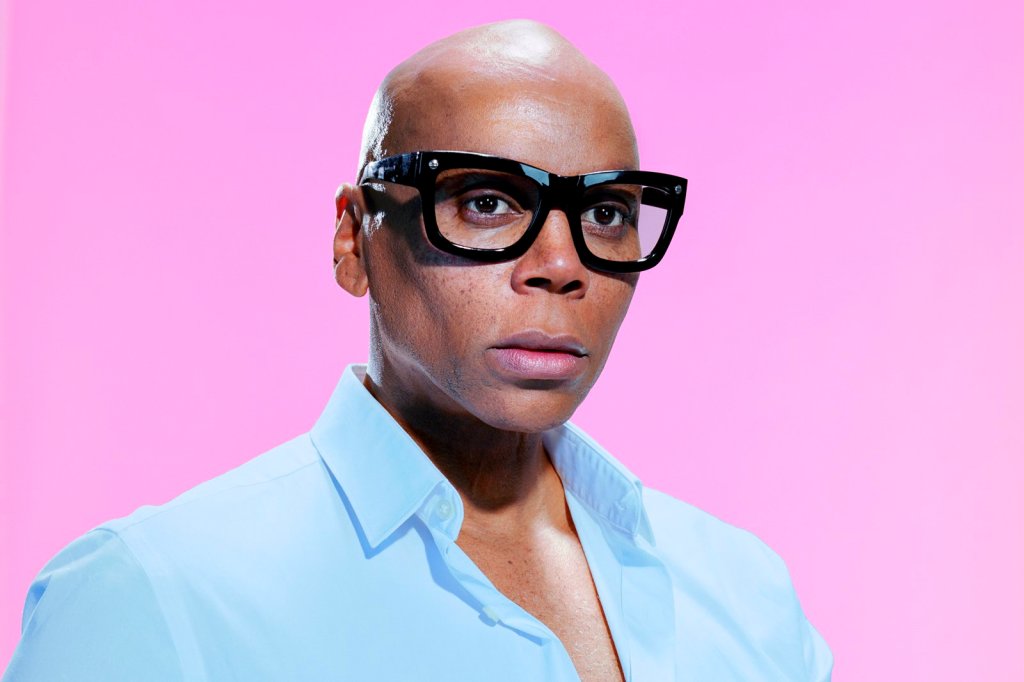
RuPaul’s Drag Race is a show that have blown up over the years as it is on its twelfth season and brought in 1 million viewers for its premiere and being Logo TVs number one show.The show documents RuPaul in the search for “America’s next drag superstar.” RuPaul, a drag himself, plays the role of host, mentor, and judge. With the shows large success it has even spanned into two spin-off series as well. RuPaul has one four consecutive Emmys for Outstanding Host for a Reality or Reality-Competition Program. The show itself has won many awards all around. The show has mini challenges which can be a photo shoot with the photographer Mike Ruiz that includes a special twist to many other things. Maxi challenges vary across each episode, and can be individual or group challenges that immunity to the winner in the next challenge. There is also a run way part where contestants can show off outfits and a lip sync battle to try and impress RuPaul. All in all this show has really help shed light on this subculture.
India
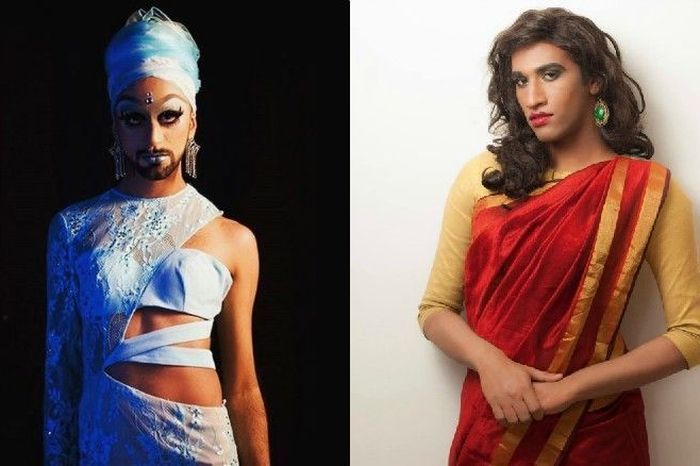
Drag culture has on the rise recently and becoming the mainstream in art culture since the legalization of SEC 377. This is a section in the Indian Penal Code that was introduced in 1861 during British Rule. It stated that sexual activities “against the order of nature” are illegal. However, on September 6, 2019 the Supreme Court of India ruled that homosexual sex would be taken out of the ruling. But keeping the law to prevent sex with minors, rape, and beastiality. This was a huge step for the LGBTQ+ community in India.
The Hotels chain of Lalit Groups spaced a franchise of clubs where drag performances are hosted in major cities of India such as Mumbai, Delhi and Banglore. This is one instance where the people of India are showing support. Other ways are through government officials and religious leaders. India is a very religious country and one citizen said that “homosexuality is a crime according to scriptures and is unnatural.” In 2008 solicitor general PP Malhotra said: “Homosexuality is a social vice and the state has the power to contain it. Believing that the gay community was unleashing AIDS to the people. Although there is many people against it religious leaders and other government officials have spoken agains and welcomed the LGBTQ+ community and drag queens have helped.
England
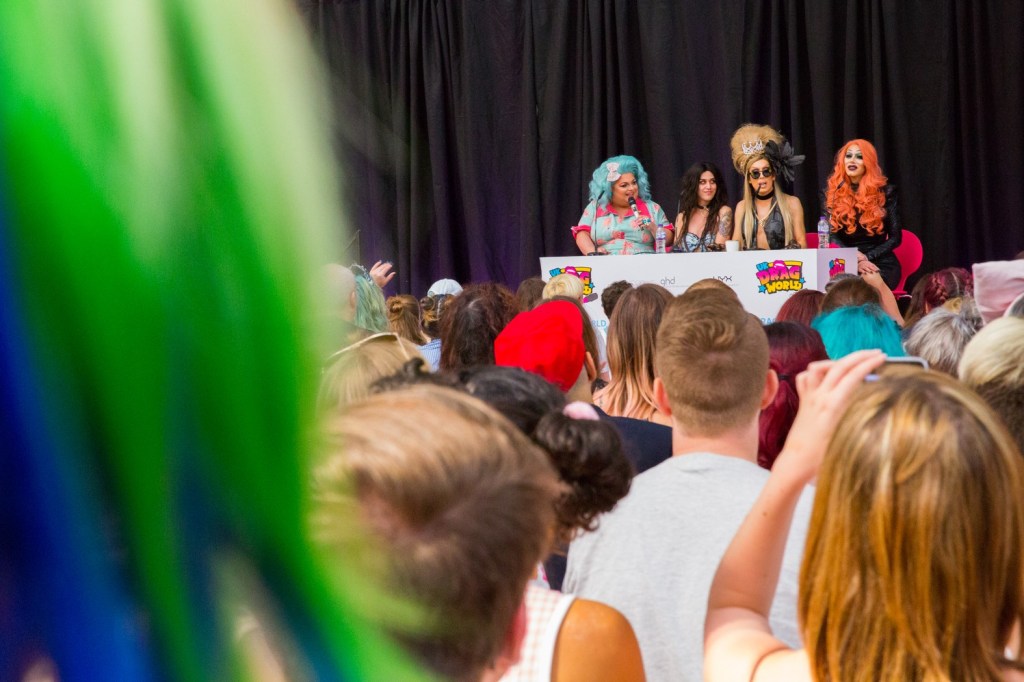
In 2017 London hosted Drag world at Kensington Olympia. Thousands of aspiring and professional drag queens attended with special guest from RuPaul’s show. It was known as “Europe’s largest drag convention” and is an spin on America’s Drag Con. There were discussion panels to talk about social issues like finding a queer family and understanding non-binary gender. This was an event that made people feel “normal”. One attendee said “I’ve had a passion for gender and the bending of it, and as a trans guy this event makes me feel “normal”, or like everyone else. I also like to do makeup, and I do drag myself. I’d like to start live performing but I haven’t yet, so just do it in my bedroom cause it’s fun to do.” Aaron was able to leave his bedroom and be able to experience the subcultural with others. Drag queen takes a lot of time to do which is why Minerva Whip said “I’m not – I’m just doing this for fun. I only do drag about five times a year, at conventions, Pride or at clubs.”
Sources
“Asian Girls Are Prettier: How Drag Queens Saved Us.” Geisha of a Different Kind: Race and Sexuality in Gaysian America, by C. Winter Han, NYU Press, 2015, pp. 127–155. JSTOR, http://www.jstor.org/stable/j.ctt15r3zzm.8. Accessed 4 May 2020.
Bahler, K. (2018). ‘I’ve Lost Count.’ RuPaul Can’t Remember How Many $10,000 Gowns He Owns. Retrieved May 04, 2020, from https://money.com/rupaul-cost-interview/
Jamooji, S. (2017, December 08). Exploring India’s Drag Culture Through The Stories Of 6 Flawless Queens. Retrieved May 04, 2020, from https://homegrown.co.in/article/802031/a-look-at-indias-drag-culture-6-flawless-queens-tell-us-their-stories
Defining LGBTQ. (n.d.). Retrieved May 04, 2020, from https://gaycenter.org/about/lgbtq/
Watson, A. (2019, July 09). RuPaul’s Drag Race audience 2019. Retrieved May 04, 2020, from https://www.statista.com/statistics/977761/rupauls-drag-race-viewers/
Pride_site. (2018, June 22). These Statistics Prove ‘Drag Race’ Fans Have a Preference for White Queens. Retrieved May 04, 2020, from https://www.pride.com/rupaulsdragrace/2018/6/22/these-statistics-prove-drag-race-fans-have-preference-white-queens
RuPaul’s Drag Race. (2020, May 04). Retrieved May 04, 2020, from https://en.wikipedia.org/wiki/RuPaul’s_Drag_Race
Drag queen. (2020, May 01). Retrieved May 04, 2020, from https://en.wikipedia.org/wiki/Drag_queen
Roschke, R. (2019, September 05). Sashay Through the History of Drag Queen Culture. Retrieved May 04, 2020, from https://www.popsugar.com/news/History-Drag-Drag-Queen-Culture-44512387
Drag queen. (2020, May 01). Retrieved May 04, 2020, from https://en.wikipedia.org/wiki/Drag_queen
Section 377 of the Indian Penal Code. (2020, April 18). Retrieved May 04, 2020, from https://en.wikipedia.org/wiki/Section_377_of_the_Indian_Penal_Code
Editorial, H. (2018, July 03). Meet the nine London drag queens revolutionising the scene. Retrieved May 04, 2020, from https://www.hungertv.com/editorial/meet-the-nine-queens-revolutionising-the-london-drag-scene/
Falconer, H., & Abraham, A. (2017, August 29). What We Saw at Europe’s Biggest Drag Convention. Retrieved May 04, 2020, from https://www.vice.com/en_nz/article/9kk8wy/what-we-saw-at-europes-biggest-drag-convention
HARRIS, DANIEL. “The Aesthetic of Drag.” Salmagundi, no. 108, 1995, pp. 62–74. JSTOR, http://www.jstor.org/stable/40548841. Accessed 4 May 2020.
Moore, Fiona. “One of the Gals Who’s One of the Guys: Men, Masculinity and Drag Performance in North America.” Changing Sex and Bending Gender, edited by Alison Shaw and Shirley Ardener, 1st ed., Berghahn Books, 2005, pp. 103–118. JSTOR, http://www.jstor.org/stable/j.ctt9qcmkt.11. Accessed 4 May 2020.
Taylor, Verta, and Leila J. Rupp. “When the Girls Are Men: Negotiating Gender and Sexual Dynamics in a Study of Drag Queens.” Signs, vol. 30, no. 4, 2005, pp. 2115–2139. JSTOR, http://www.jstor.org/stable/10.1086/428421. Accessed 4 May 2020.
 SOCI 260: Deviant Behavior